Learn first
KMBS latest news in real time
For the latest KMBS events and news, visit KMBS Live at the top right corner of the screen
Open kmbs live 01.09.2025
 2905
2905 7min
7min


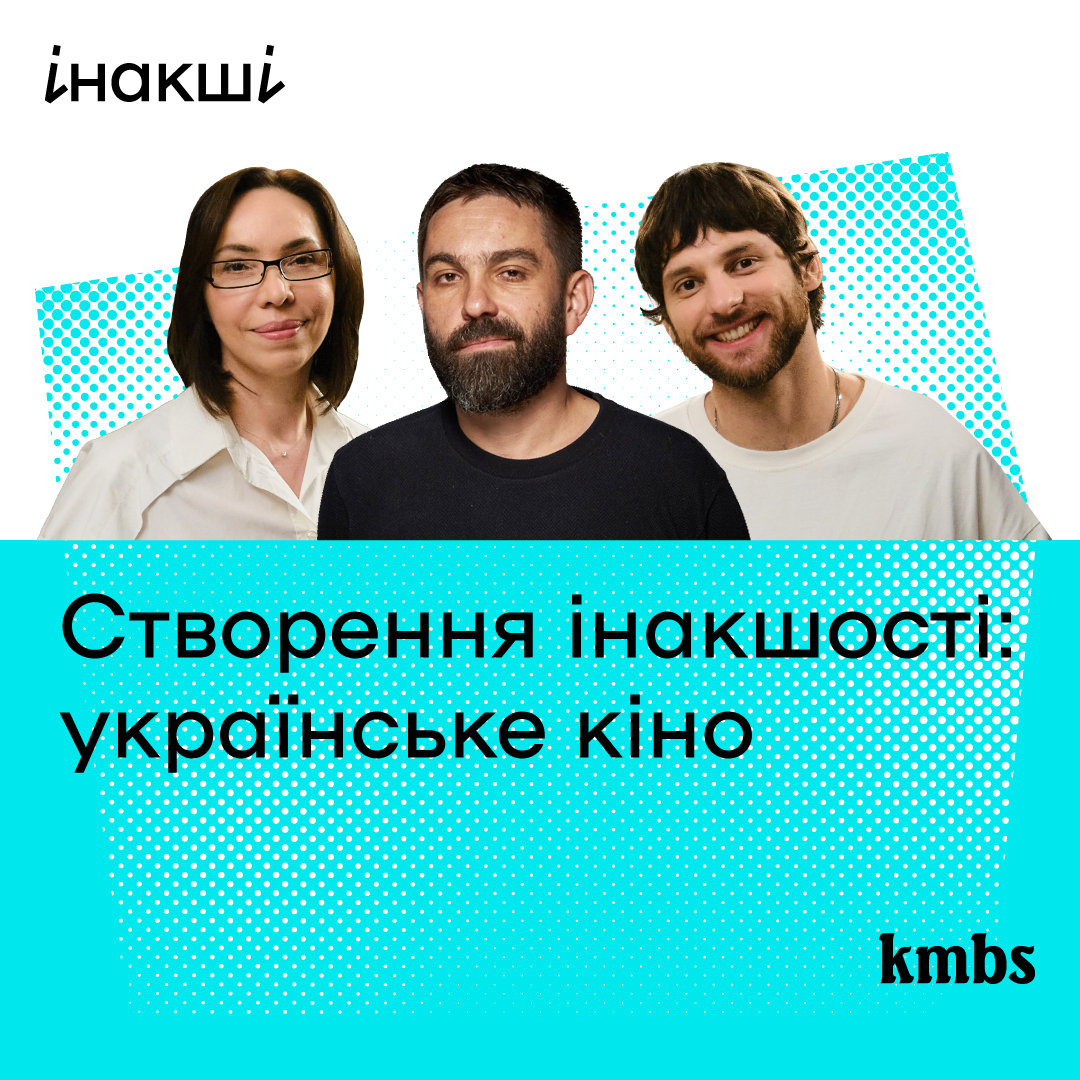
Olena Maltseva: Mariia, when you were starting your project, were you consciously trying to create something distinctly different from what was already on the market?
Mariia Havryliuk: Yes, both my partner Natasha Kamenska and I felt that the fashion industry had become too commercial and predictable. It seemed like all the design and creativity had disappeared, replaced by financial directors. Gunia was born out of a desire to create something unique, focusing on craftsmanship and storytelling. Initially, we didn’t even think the project would be about Ukrainian culture—it was more about making unique things.
Vlad Bolsun: Where does the desire to pursue uniqueness come from?
Mariia Havryliuk: There are two approaches. The first one is when you use proven tools. For instance, how mass-market brands work—they monitor luxury fashion trends and then produce cheaper versions of them very successfully. That’s a very commercial approach. The second one is a creative approach—you simply want to create something new. Where does that come from? I’m not sure. I’m just interested in expressing things, exploring. Creativity is exactly like a muscle—anyone can develop it.
Vlad Bolsun: Creativity is an innate trait—we all have it. No one is born creative and remains that way forever while someone else is not creative at all. What matters is finding the ways to unlock your creative potential.
Olena Maltseva: And here, it’s important to stress that creativity can be expressed outside of artistic professions. If you have developed creative thinking, it allows you to create multiple alternatives. That means you’re more likely to make better management decisions. Creativity should be considered both in decision-making and in the role of a CEO, designer, or accountant. Also, uniqueness doesn’t necessarily mean doing something completely new—it can be the ability to reinterpret what has already been done by others.
Mariia Havryliuk: Creativity is needed even in technical product development. Finding a technical solution isn’t easy. To create something different, you have to be open to experimentation and willing to spend resources, materials, time, and money. Most people aren’t ready for that. But with a little more effort, you can create an excellent, novel product with far more potential.
Olena Maltseva: How does creative thinking help you in your role as CEO?
Mariia Havryliuk: It helps in finding unconventional solutions. You can apply it to all kinds of tasks—retail, sales, finance—anywhere really. Creativity equals problem-solving.
Vlad Bolsun: Let’s dig deeper: how can someone unlock creativity within themselves? Do you have a specific structure or process?
Mariia Havryliuk: I wouldn’t say I have a fixed formula, but I do go through certain steps. 1. To find a solution, you need mental space. If my calendar is packed with nine meetings a day, I definitely won’t have space to reflect or think. So for me, this usually happens in my non-working hours or during some routine tasks—when I’m driving, showering, cleaning. Then, when I sit down to focus and no one distracts me, in a safe space, ideas just start flowing. 2. When you need creativity and ideas, put yourself in a completely different environment. I joined KMBS (Kyiv-Mohyla Business School) because I had no idea how to scale the business next. Learning isn’t just about interacting with professors—it’s also about the peer environment. People who are likely dealing with the same questions. It’s another creative approach—if you’re open to it. My feature is that I come up with an idea very quickly, though I might be “cooking” it internally for a long time. I constantly simmer in thoughts, and then, in a flash—eureka! Sometimes creativity runs out, and that’s normal. We then involve new people—designers, art directors—who bring a fresh perspective.
Olena Maltseva: So to sum it up: there is a process to creative thinking, but it’s unique for everyone. It enables breakthrough ideas, products, and decisions. We’re talking about successful products—because sure, you can create anything and claim no one understood you. It’s important to stay one step ahead—but two steps might be too much if you’re not ready to cultivate the market and show clients how to use or wear the product. You once spoke about your experience with the Honchar Museum. Is that a safe environment—a place to search for ideas or to reflect on them?
Mariia Havryliuk: Both. Sometimes I just go there. Natasha and I have said before that we can’t separate work from passion—it’s all blended. It’s about observation. We travel, get inspired, and then apply it in our work. Sometimes, like in the Honchar Museum, they bring out a towel from the archives. I see it, Natasha and I hold hands and say, "Wow, that’s going to be the image for our next collection." That moment of inspiration can be instant. Other times, you just take in the enormous amount of information and store it internally. You may notice a color here, a shape there, a technique elsewhere—and that becomes part of your foundation that eventually flows into a new product. This diversity, exposure, and curiosity lead you to ask the right questions. And when you ask questions, you find better answers—and uniqueness.
Vlad Bolsun: In English, there's a word for that—serendipity—the ability to accidentally find something valuable. That captures the creative process well. Ideas don’t appear out of thin air. You have to load yourself with as much information as possible. As an example, take Newton—the apple didn’t lead to the discovery immediately. He had already accumulated lots of information, and that minor incident made everything click. So the more you absorb, the more open you are, the better your ideas. Mariia, what forms your creative vision?
Mariia Havryliuk: Definitely travel, cinema, museums, art books, and literature—because I work in a visual field. But it could also be something unexpected. I draw energy from people—their ambition, their thoughts. When someone inspires me, I channel that energy into my own flow.
Olena Maltseva: Let’s return to the Honchar Museum. You saw a towel with an image you liked, which you understood would be the central symbol of your next collection. What happens next? How do you turn that insight into a product?
Mariia Havryliuk: Once the theme is found, I just start drawing, and ideas come on their own. Before that, of course, I understand the framework of what we want to create. It starts with a core item and often branches into new areas. A key part of the process is that I’m not alone—my partner Natasha is involved, too. She sees what I don’t, and vice versa. That co-creation is very inspiring. When there’s trust in each other’s taste, even more ideas emerge and enrich the concept.
Olena Maltseva: At this point, you’re speaking as a designer. Meanwhile, I always think like a marketer—does this idea have enough potential to scale across a large product assortment? What's your primary mindset?
Mariia Havryliuk: Commercial thinking is never our starting point. We simply do what we love. That’s the foundation of Gunia. Natasha and I intentionally decided: this is not a clothing brand, not ceramics, not jewelry—we do whatever excites us. And people tend to feel that. I’m not sure it’ll always work this way.
Olena Maltseva: On the one hand, you follow what you like; on the other hand, it’s still a commercial project. For example, December 25 is coming—you need to prepare something new, whether the idea has come or not.
Mariia Havryliuk: Of course—we do follow a calendar.
Olena Maltseva: So at some point, you need to decide: do I like the idea or not? Are you willing to work with an idea that doesn’t fully excite you but just has to be released?
Mariia Havryliuk: That has happened. Sometimes the idea is there, sometimes not—but this is still a business, so we follow the marketing calendar. We prepare collections in advance. It’s never last-minute. But sometimes we take more time to "carry" the idea and make countless refinements. Last Independence Day, we had to create a piece of jewelry. We aimed to find a new, unique symbol that a broad audience could relate to. It was a hard task—we were stuck for a month and a half. And then, the deadline approached. One day, Natasha was in the kitchen with our B2B manager. He asked when the collection would be ready, as he needed to start selling it. She responded, “We’ve made 150 sketches, but nothing feels right.” And he said: “Maybe we should look into Cossack heraldry? Independence, war—it’s very relevant now, and no one really explored it yet.” Boom, that was the insight. We found a historian who advised us to use the symbol: a heart with arrows. That became the new piece of jewelry. It was an unusual path, but shows that ideas can come from anywhere.
Vlad Bolsun: It’s crucial to stay open to ideas. If Natasha wasn’t open during that kitchen conversation, she might’ve missed it completely. Seeing and really looking—those are different things.
Mariia Havryliuk: Exactly.
Vlad Bolsun: Let’s go back to the beginning of making a collection. You said you just sit down and start drawing. Do you sketch freely or with a clear direction in mind? Like with freewriting—just drawing whatever, or drawing something specific?
Mariia Havryliuk: We have a whole team working on it. It’s always a collective result. Never just me or Natasha drawing alone. We first identify the theme we’re working on. Sometimes, we get inspired by something—like a cat at the Honchar Museum. Other times, we know we’re creating, say, a New Year’s collection, so we look into folklore for symbols like snakes, St. Nicholas, etc. We consult with ethnographers and designers to find relevant concepts. Because we work with Ukrainian culture, we always need a strong foundation for our creative direction. So first comes ethnographic research—patterns from home decor, ceramic tiles, embroidered towels, Bukovinian icons, etc. Usually, it’s not one specific item but a collection. Then, we consider what type of product we want—clothes with embroidery or print? Ceramics? Jewelry? We assess how things combine, what fabrics, colors, or materials to use. Natasha and I develop a core of the concept. Then we visualize it—through mood boards or hand sketches. With those in hand, we meet the designers and guide them. Sometimes we leave room for creativity; other times, we have very precise expectations. After that comes a long process of development and adjustments—a strong idea might spark an even better one. The production phase weeds out some ideas that aren’t feasible. I love prototyping—it’s the most exciting part. People think you dream it and it appears. But it’s a multi-step process full of trials, errors, and immense teamwork.
Olena Maltseva: Basically, the first stage is observation and gathering visual references. Then you get the idea, discuss it with your partner and an ethnographer. From there, you translate it into implementation, move to designers and production, and only if feasible—it’s manufactured in volume.
Mariia Havryliuk: Exactly. First, you frame the task. Then—deep dive into information and meaning. Next comes the visual exploration and product concept. Then, we fuse all that into conceptual ideas. After that, we develop and prototype, research materials, start production, run tests—until we get the finished product.
Olena Maltseva: How do you react when someone in production tells you, “Mariia, this idea is impossible to implement”?
Mariia Havryliuk: I say, “Let’s try again.”
Vlad Bolsun: That’s an essential part of creativity. There’s no such thing as impossible—just a different way to make it work. When you start thinking differently, the world changes, because “impossible” is just a default excuse not to act.
Mariia Havryliuk: There are stop words though. Like “too expensive.”
Olena Maltseva: That’s when the CEO needs to step in—not the creative director or the designer. A CEO says: it’s great and doable, but not affordable yet. That means fewer people will be able to buy the vase, jewelry, scarf, or whatever it is.
Mariia Havryliuk: Exactly. Then you get a decision tree. Sometimes it is expensive, but it’s a conscious marketing decision. Like our blown glass products—they’re pricey and difficult to produce, but we love doing them.
Olena Maltseva: And that’s very valuable because you’re working with Ukrainian identity, showing the world what Ukrainians used to create long ago.
Mariia Havryliuk: Absolutely. We realize we can’t wholesale those items because the price doesn’t allow it. But we do them anyway. Other times, we realize that an idea isn’t worth keeping—and let it go. It happens fairly often.
Olena Maltseva: You’re running a business where not every idea or collection can be a hit. When do you feel confident that an idea will resonate and people will like it?
Mariia Havryliuk: I rely heavily on intuition. I either feel completely confident and excited—or I don’t like the idea, and then we usually don’t launch it. Some products are amazing, and we release them but know they won’t be top sellers.
Vlad Bolsun: Can you split a team into dreamers and doers? Or should one person handle both roles?
Mariia Havryliuk: You absolutely have to split them. No one is perfect at everything. If a person’s strength is creativity, then they’re probably not great at administration. And development requires strong administrative skills—deadlines, tasks, payments. Our team is organized accordingly. We have a production department, designers, and Natasha and I each focus on specific roles.
Vlad Bolsun: What is an idea? Is it just a thought, or only the finished product?
Mariia Havryliuk: It’s the final product. I have huge respect for people who can turn an idea into reality. Being a dreamer is nice, but unfortunately, it’s not enough.