Learn first
KMBS latest news in real time
For the latest KMBS events and news, visit KMBS Live at the top right corner of the screen
Open kmbs live 27.01.2026
 2229
2229 5min
5min


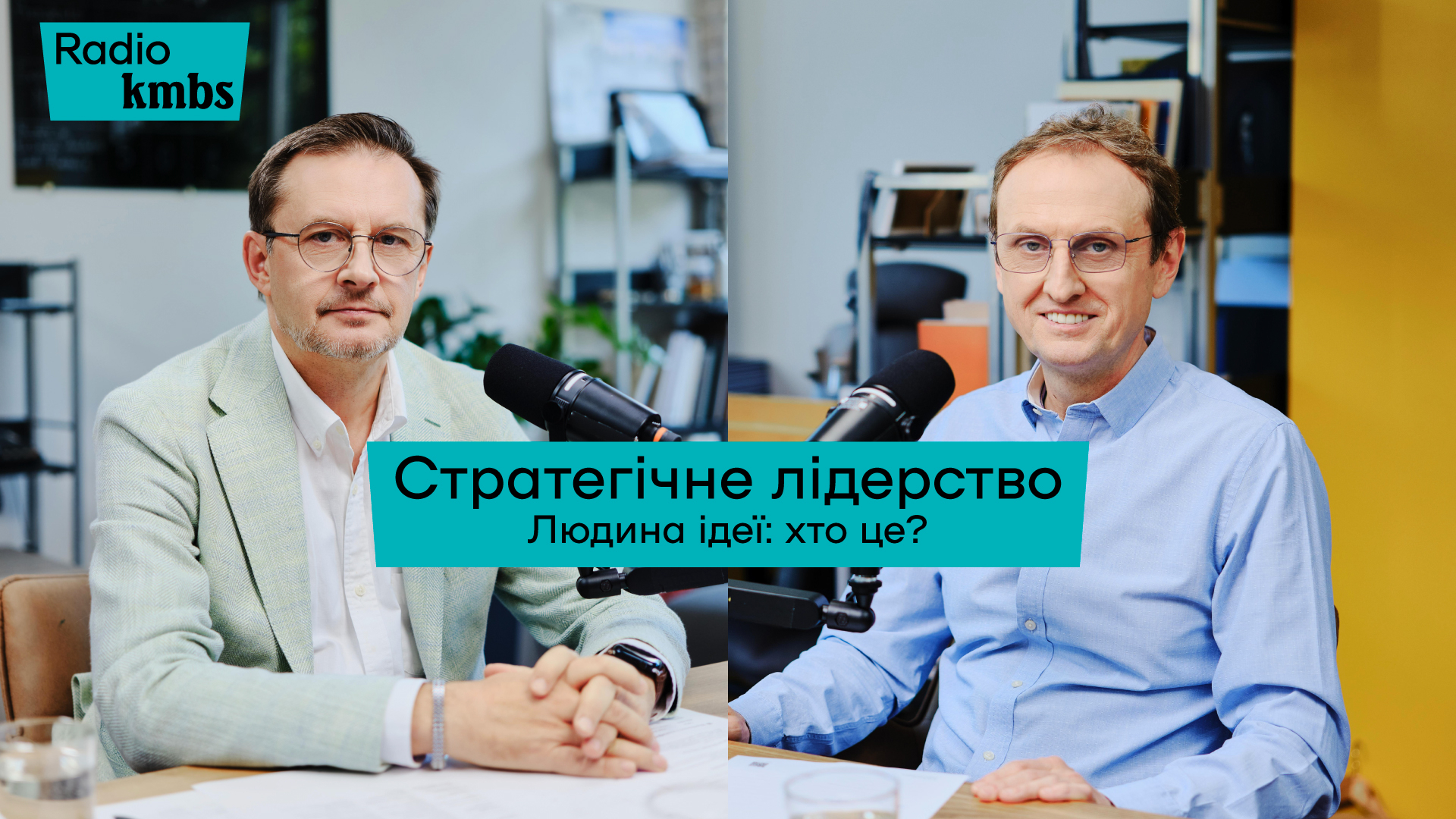
In the conversation, Serhii Fedoryk, lecturer of the program “Project Management: Moving to a Higher Level of Complexity”, founder of KEY Group, alumnus of the Executive MBA and the School of Strategic Architecture, explains what makes a project manageable, how to work with the project management triangle, risks, and stakeholder interests, and why trust can sometimes matter more than planning.
Where does a manageable project begin in real business? What do managers most often mistakenly ignore before shifting to this logic, and what does a “manageable project” actually mean?
Sergiy Fedyoryk: A project becomes manageable when three things are synchronized: expectations, capabilities, and the action plan. If even one of these is not aligned, the project loses manageability.
Following up on this topic, could you explain more about the project management triangle?
Sergiy Fedyoryk: The project management triangle is a basic model that combines three components: cost, time, and scope. The balance between these three parameters always affects quality.
You can change one parameter at the expense of the other two, but quality will then be at risk. What you cannot do is save two parameters by relying on just one. The balance of all three is what ensures quality.
For example, if we increase scope while keeping cost and time the same, quality will predictably decline. If we increase scope and add time, then at the same cost it may theoretically be possible to maintain quality.
Let me give an example from house construction:
- We reduce cost while keeping time and scope unchanged. Most likely, we will end up with a team of a different specialization—not a premium segment, but standard construction. Cost is lower, scope is the same, time is the same, and quality is lower.
- We reduce cost, keep the scope, but significantly extend the timeline. In theory, this creates a chance to ensure quality.
That is the essence of the triangle: if you “worsen” something in one corner, the other two must be strengthened accordingly to preserve quality. Otherwise, quality will inevitably decline.
How can projects be managed in a way that preserves quality and results when conditions are constantly changing?
Sergiy Fedyoryk: Risks must be voiced at the very beginning, the boundaries of uncertainty must be discussed, and uncertainty should be accepted as part of the project. Only this approach allows you to remain synchronized during execution; otherwise, you fall out of the logic of manageability.
For example, we start a project where there is no defined budget or project documentation yet, but the client wants a cost estimate. A key mistake at the start is naming an “exact” figure when there is insufficient data. Instead, it is better to provide a range and explain what will be clarified at each iteration.
For instance:
“At this stage, we do not yet have clarity on design solutions and part of the input data (engineering surveys, technical specifications, etc.). Therefore, we assume the cost will be USD 1,000 per m² ± 50%. If this fits your financial model, we can proceed. After each iteration, we will refine the estimate.”
Clarification iterations may include: collecting initial data, designing the relevant stage, tenders, construction, and addressing comments. After each stage, we refine the budget, and the uncertainty range gradually narrows.
Over time, it becomes clear where we built in a buffer and what can be reduced because certain risks did not materialize. For example, instead of USD 1,000 per m², it may turn out to be USD 950. At the same time, the contingency reserve—as a framework for uncertainty at the start—remains in place.
What other factors influence project implementation?
Sergiy Fedyoryk: One of the key factors is trust. This includes trust between client and contractor, client and supplier, or trust within the client’s own organization. Sometimes people enter a project as colleagues and friends, and leave without speaking to one another.
Project goals must be subordinate to business goals. How can one distinguish a correct project goal from one that is simply convenient or “politically attractive,” and how should it be formulated properly?
Sergiy Fedyoryk: The test is simple: can the project goal be integrated into the strategic framework of the business? The strategic framework is approved by top management. A project manager may propose goals based on the task at hand, but only the project sponsor can confirm them.
A project sponsor is a role (usually a specific executive) who initiates the project, makes key decisions, and accepts the final result.
Is it correct to assume that the interests of all stakeholders should be considered when defining project goals?
Sergiy Fedyoryk: Stakeholders are all those who influence the project or are affected by its outcome: the sponsor, the team, contractors, suppliers, internal users, adjacent departments, and others.
One common challenge for project managers is balancing the interests of different stakeholders. It is precisely an imbalance of interests that can cause a project to fail or to undergo significant changes.
Some expectations and interests are not obvious at the start and are difficult to identify immediately.
Identifying stakeholder interests is an important task.
Whether an imbalance will affect project implementation depends on who the stakeholder is and how much influence they have.
There are stakeholders whose interests are relevant only during a specific phase. For example, a contractor may join for a particular scope of work, complete it, and leave—their interests matter only within the period of engagement.
There are also stakeholders with continuous involvement but minimal influence on the course of the project. They will use the result, may provide documents or technical requirements, and accept the completed outcome. After the technical assignment is issued, their influence on implementation is usually limited.
Is it a problem that these interests are often addressed too late?
Sergiy Fedyoryk: Yes. Stakeholder interests must be addressed from the very beginning.
This means identifying interests in a timely manner, creating a stakeholder interest map, defining how the project manager will take these interests into account, and understanding how much this will cost the project.
Some stakeholder interests may not align with the project goals. Others may lie outside the goals but still be interests that you can—and are willing to—satisfy.