Learn first
KMBS latest news in real time
For the latest KMBS events and news, visit KMBS Live at the top right corner of the screen
Open kmbs live 16.04.2025
 3583
3583 11min
11min


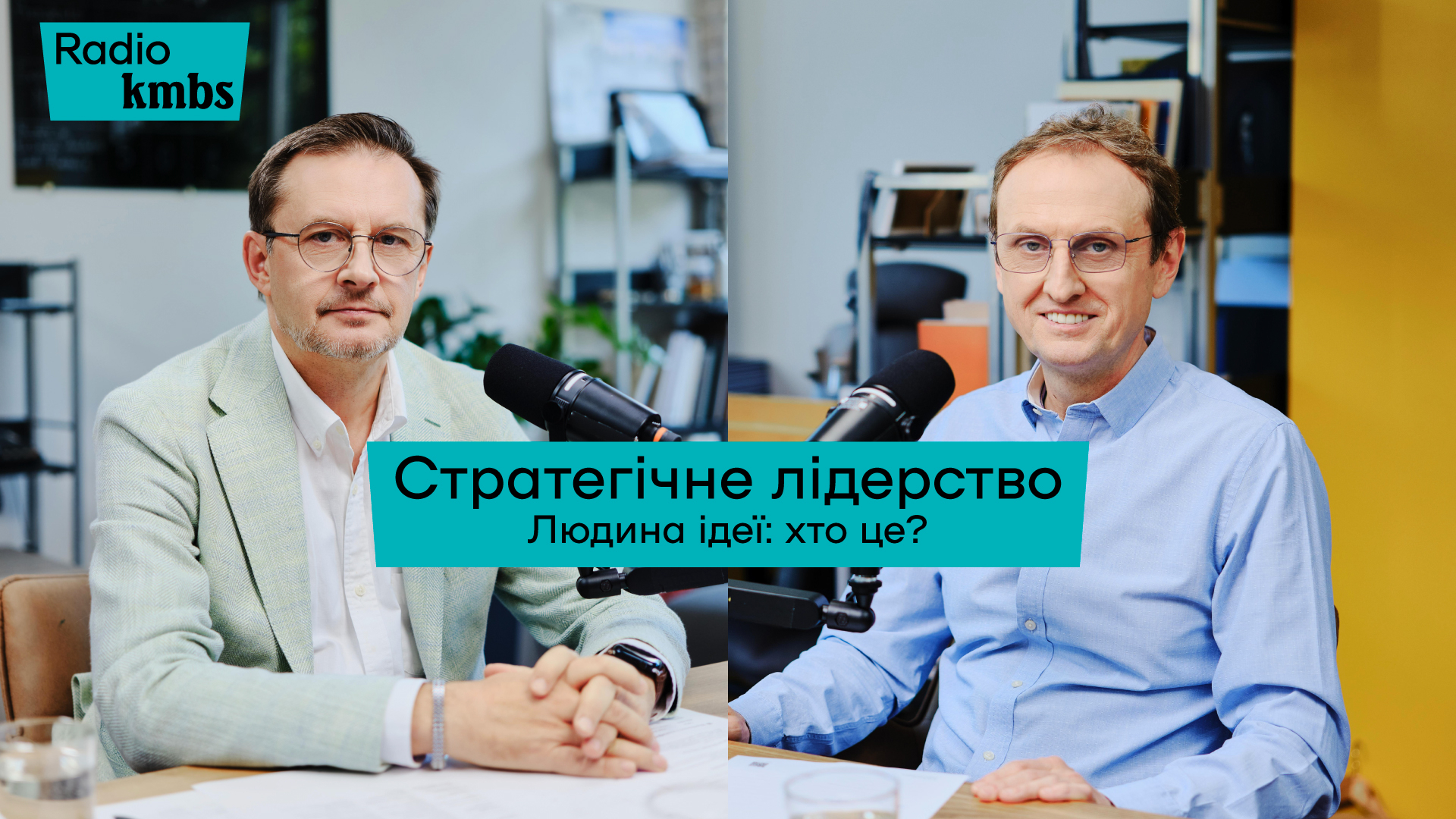
Yuliya Pliieva: When I was studying abroad, I met an entrepreneur from Argentina, a fifth-generation owner of a home textiles manufacturing company. I asked him about his growth plans, and his response shocked me. He said he had no such plans. His task was to maintain the stability of the business. What direction does your company choose: active scaling or stability at the current pace? In other words, is it scale or die? Or is it not?
Lev Zhidенко: Short answer – yes. Once, I studied in a Swedish project at the Stockholm School of Economics. We were taught that in business, every year can have only one strategy: either growth, quality development, or profit. In Northern Europe, it is believed that combining three strategies in one year is absurd and causes a lack of focus because it's difficult to do all three things simultaneously. However, we work in parallel in all three directions because competition demands it. The logic of Western networks like One Dollar Store is expansionist, and they will inevitably enter the Ukrainian market someday. If we don't play proactively, we will lose. Because in our business, operational efficiency is number one. Thus, the effect of scale also impacts this.
Urfan Guliyev: There are three components here. The first question is the psychological portrait of the owner. The second question is the nature of the business. And the third is the source of funding. When it comes to the psychological profile of the owner, all businessmen are usually ambitious people; they constantly want to grow.
However, I want to focus on the second and third questions. I know the company Good Wine well; it's a fairly marginable business where you can make money without growing territorially. This company can't be everywhere because there are not buyers everywhere. If it were a low-margin business, there would be no alternative but to grow.
The third question concerns the source of funding. All our companies eventually come with capital from the West. Often, this is financial capital focused on growth. For example, in our distribution, our main partner is Procter & Gamble, the stock exchange. A stock analyst primarily looks at how companies are growing. And we constantly feel this. All models are built on the assumption of continuous growth.
An example of this is the company Watsons, which once belonged to us, and in 2006, we sold a controlling stake to a strategic investor. The crisis hit in 2008. Due to financial difficulties, many players in the market came to us asking us to acquire them. But Watsons, at the time the undisputed market leader, said, “Why do we need this? They will still go bankrupt, and we will take it all ourselves.” At the same time, I observed their conservative approach to opening new stores. To open a store in Kyiv, they had to coordinate algorithms in Hong Kong. Gradually, they began to lose momentum. Today, Watsons has lost its leadership position in the market. Another company, one that grew very actively, has become the leader. This is a case: where there is no growth – there is almost death. Because it is not a high-margin business.
The second example is the winemaking business. Often in wine retail, the majority of suppliers are local family producers. Some of them sold to a financial investor (who steps in to develop the company and then sell it). Once a financial investor enters a company, everything starts to change. They say, “We need you to sell more.” But for a local winemaker, built on their own winery, they lack the raw materials and start buying it from others. Then, it’s no longer original wine, but marketing does its job, claiming it's the same wine. This is an example of the nature of money that appears in the business and drives us to keep growing. Our company Asnova Holding does not want to grow too much because we value emotional contact with people.
Yuliya Pliieva: So, "scale or die" depends on what business model we are in.
Volodymyr Orlov: Here it’s important to understand whether we want to scale or not. But if we talk about giants like Cisco, we have no choice but to scale and show financial results. If you are a public company, you definitely have to grow because a small mistake significantly impacts capitalization.
The company Nortel Networks was a giant in the telecommunications world with a ten billion turnover, which died in a year simply because there was no scaling and subsequent financial results. Therefore, the criterion is: if we have a goal (turnover), we must scale and grow.
Only a few think about how they are changing this market, creating innovations, and a new consumer culture. These companies then conquer the market, and their model of “scale or die” is of a different nature.
Urfan Guliyev: Especially now, during the war, all investors want to have a company with export potential or to take the business abroad. This also encourages Ukrainian companies to move beyond their borders.
Yuliya Pliieva: Mr. Lev, what is the growth goal of "Avrora"?
Lev Zhidенко: I will start with Avrora's mission – to improve people's everyday lives by making goods for home and soul more accessible. We have a goal regarding territory and market penetration. It adjusts all processes in the company. Together with this, there are 180 departments and many areas in Avrora. Each of them has its goals that help this chain to function.
I want to emphasize a conceptually slight difference between business models. The first business model is leadership in operational efficiency, meaning where the company is successful in the market because it is operationally more efficient. In fact, we work in this model. The second model is product leadership, due to the product being exclusive or unique, like the iPhone. The third segment of business is customer intimacy. The one who serves the customer most deeply and fully tailors to their needs.
Yuliya Pliieva: Here personalization, customization kicks in, specific proposals.
Lev Zhidенко: This can apply to boutique legal companies. There is a significant influence of the business model on the company's processes and how it builds its competitive advantage.
If we return to operational efficiency, the most useful tool for leadership is lean management. One of the fundamental aspects of lean management is the supply chain. Where goods should move with some speed and rhythm: from production to reaching the consumer. These are long chains that extend beyond the company. The effectiveness of this conveyor will drop sharply if there are disruptions or stops. Therefore, its constant speed is crucial for efficiency.
Yuliya Pliieva: Volodymyr, what is the continuous growth goal at Cisco? Is it EBITDA, Net Profit, capitalization, new market segments, or some endless innovations?
Volodymyr Orlov: Our primary sales instrument is based on our purpose. Understanding the purpose and how we realize it in the market is a very important aspect when we talk about company growth. Cisco is a public company, and we want our capitalization to grow. Our main goal is that sales are predictable and stable, not ones that rise significantly today and drop next year.
We are one of the best examples of a company’s transformation. Cisco used to be entirely dependent on hardware sales, and now we are a company that sells software, with our primary business being subscriptions. We have $40 billion in Remaining Performance Obligations (RPO), of which 50% we will fulfill over the next 12 months. This means if we earned $56 billion in a year, $20 billion is already secured for the next year. And this is absolutely predictable and stable; the market likes it. Now, the majority of large companies are evaluated not by their turnover, profit, or margin but by their RPO, how predictable and stable their business is.
Yuliya Pliieva: So in an unpredictable, unstable world, you have to be even more predictable and stable. That's a very nice and ambitious goal.
Volodymyr Orlov: Once you start thinking in this way and searching for solutions to be more predictable in an unpredictable world, you come to the realization that primarily all big sales transform into many small sales. And subscriptions are a vivid example of this. Our largest contracts are three-year, five-year, and ten-year agreements in subscriptions, along with cross-sell and up-sell models.
Our main goal is to generate money for our shareholders. As pragmatic as it may sound, we want to provide monetary value to our shareholders. If they receive dividends and see stock growth, our capitalization increases. They will receive this when we become even more predictable. Because shareholders will be confident they will receive these dividends next year.
Yuliya Pliieva: This resonates very much with what we heard from Japanese companies, where the goal of business is harmony.
Mr. Lev, Avrora has a unique culture. You are said to be a company with open relationships within the team, with employees. You are perhaps the only retail chain that opens its data to partners and suppliers. Can you comment on where this comes from? Is it a natural emergence, or are these your values?
Lev Zhidенко: In any company, to some extent, the influence of the founders, their character, manifests in how the company operates. When I was in Silicon Valley, I analyzed Google, Facebook, Netflix, Amazon, and others. It turns out that their management tools are very similar in many ways. But the companies are absolutely different. And they differ in their corporate culture.
Certainly, Avrora thinks in a way that benefits the business. Because not everything in our characters is necessary for the company. Gradually, this crystallizes; you develop, transform, and tailor what will be better for you.
You mentioned that we are open. This, by the way, is a Swedish business proverb: “More flies can enter through an open window than through a closed one.” Though I used to fear that someone might learn and copy our approaches. Then it became clear that it’s impossible to fully replicate it. The very fact of corporate culture is nearly uncopyable.
Openness must be present not just within the company but also with partners because it’s advantageous. There is always some stress for employees and partners. There is a stereotype that it’s their problem. But within the walls of kmbs, we often discuss the architect of the ecosystem (the one who created it), who, in fact, loses the most if the elements do not have an interest in being a part of it. Therefore, it’s advantageous because it benefits our suppliers to work with us.
Yuliya Pliieva: It's amazing that you understand this. Many retailers are still stingy with information and do not share it with suppliers.
Lev Zhidенко: We always analyze the top players in the world and what happens with them every quarter. We compare ourselves to them and strive to reach their level.
Yuliya Pliieva: Mr. Lev, what is a "zdibanka" at Avrora?
Lev Zhidенко: The company has six or seven levels of hierarchy, although in some places we try to build a horizontal structure. In stores, for example, we haven’t figured anything out except the hierarchical structure yet. Because these are very large scales.
At these six levels of hierarchy, there is a natural bottleneck of information. As managers, you have a sense that someone fears passing it upward, and someone misunderstands it. Consequently, information gets lost somewhere, and hence, the opportunity for management is lost. At that moment, the office becomes detached from reality in the cosmos. To be on the same wavelength, various forms of openness and accessibility are created for anyone. We call this the open door policy. Everyone knows that there is Lev’s office, which doesn’t even have a key. And when I am not in the office, anyone can use it.
Our "zdibanka" is a Zoom meeting twice a week for all employees simultaneously, but there is a rule that you are not obliged to attend such meetings. You can join; there will be top management: either me or the CEO of the company. There is also a form for questions and an open microphone. We listen and give feedback, acting as coaches, psychologists, and leaders.
Yuliya Pliieva: It’s interesting because I haven't heard of any company that has such a practice. Did you develop it yourselves or did you see it in the world-leading companies you look up to?
Lev Zhidенко: I think it was born naturally. At first, we just gathered once a week in the office: we summed up, talked about rewards and life in the company. When the COVID pandemic hit, we could no longer meet physically, and that’s when Zoom meetings started.
As an ambassador of lean, which has a second name "Continuous Improvement," I would say that continuous improvement can be an aim. Very often, we see numbers as goals. But that aspect is secondary. If you continuously improve, compare today’s self with yesterday’s self, and become better each day, your metrics will automatically improve. And these "zdibankas," these meetings, also continuously enhance that. Hence, we didn't do any copy-pasting here, although we adopt a lot.
Yuliya Pliieva: Openness, win-win, the effort to continuously receive feedback and improve based on that. It’s a very interesting practice.
Lev Zhidенко: I am confident that when you receive healthy feedback, you can become better because of it.
Yuliya Pliieva: Mr. Urfan, Asnova Holding has been around for 30 years. One might assume it’s bureaucratic. What is your corporate culture, management system, and the principle of "more flies enter through an open window than exit"?
Urfan Guliyev: We don’t have bureaucracy, although sometimes it is lacking. The company employs 3,500 people, which makes things difficult sometimes. There are places where it’s impossible without processes and bureaucracy altogether. But generally speaking, if we talk about the model, "open window" was officially declared back in 2007 when we agreed on human resources policies and stated that each employee has the right to approach shareholders and communicate with them. There were times when people actively used this right, and then it became routine. Over the course of 20 years in the company, I can say that the main purpose of the "open window" between shareholders and employees is to emphasize that there is no great divide between us.
I have experience of how behavior models change, primarily management, in companies that are used to existing in one model, and then someone sells a controlling stake to foreign partners, and it turns out that different people manage the company. The management operates on behalf of those people. And our management lacks this. Because there are issues that can only be resolved by the owners: ultimate decision-making. Especially when you work in unpredictable conditions, often there are questions that the management of a foreign partner cannot resolve. They take that question, walk away with it, and it dies somewhere. Our people are not used to that. They know that any question has always been resolved within the company, no matter how painful it was.
I noticed that people initially become disoriented. Then they transform into corporate animals for a time, especially when driven by KPIs. Corporate animalism kills the person. In our company, all managers started from linear roles, so they cannot become corporate animals even if they wanted to. They experience an internal contradiction. Subsequently, they start to seek us out. Despite being minority partners, we don't make all decisions. I have realized this over many years. And it's happening now in companies in which we established joint businesses. This difference in corporate cultures is evident.
Yuliya Pliieva: Can this shift in corporate culture towards corporate animals hinder the growth and development processes of the business?
Urfan Guliyev: In the long term - yes. In the short term, it can even help. Because when people are solely focused on KPIs, they will move along those lines without noticing anything else. If you’re a minority partner and you have plans to sell shares, you’re not planning to stay there long, which can also help. But these are still your people, who have grown internally. You essentially made them top management. You can’t just say, “Well, that’s it, you’re on your own now.”
I also wanted to mention the openness of information. First, we have a Ukrainian mentality, and we are too cautious about information, even when it’s not difficult to find in other sources. This mental limitation hinders us. In general, in the distribution business, when you have foreign partners, large producers of financial products, you constantly operate within a model's framework. They tell you: “You will have such a model, such a pricing policy, this is how much you can earn and no more because there is a model.” We have worked this way for many years, and every time we asked for information on how things work in other countries, we were denied. However, we had a partner who distributes throughout Europe. He looked at these models and said, “What have they been telling you? In Europe, the models are entirely different; they earn money differently.” And this information was always closed to us; we couldn’t use it, which is why we missed out on earnings. Openness of information is a very important factor. In today’s world, it’s almost an axiom, but mental limitations exist.
Yuliya Pliieva: Volodymyr, at Cisco, there are more than 70,000 people. How do you conduct "zdibankas" and what is your management system, the access system for shareholders if some issues need to be resolved? How do such large systems function, grow, and develop?
Volodymyr Orlov: I'll start with a story I remembered when Lev was discussing the openness of the company and the transparent walls in the office. When I visited our headquarters in California and met with our CEO, I saw a space where top management was located. It was a large area with a security booth in the middle, where small compartments hosted five top managers from Cisco. At that time, our CEO was John Chambers. He was a vivid example of a closed system, which led to him being replaced. I walked in and said, “John, how do you breathe here? Why do you sit in this booth?” He explained, “You know, we are big top executives—what if some sniper from afar shoots me?” These were recommendations from the security service to protect the top management of a large company. Of course, that booth no longer exists. I like our top executives. We transitioned from a closed system where you sit in a booth and are governed by hierarchy, processes, and rules, to a culture of an open system where you are governed by values.
We often talk about purpose because that's what unites 70,000 people. We say that no business in the world can exist without our technologies. You use all our technologies but simply don’t realize you’re using them. That is, any device you have essentially utilizes Cisco technologies on the path from you to the information you receive. Accordingly, values play an important role. Even in our purpose, we no longer say we create holder's value (value for shareholders), because now we create value for everyone: customers, partners, our employees, as we are in competition for talent.
Our "zdibanka" for 70,000 people occurs monthly and is called "Ciscobit": our CEO and top management gather all employees to discuss important issues. There are also monthly leadership meetings for management.
Of course, there are many operational processes managed by the company. Despite having horizontal openness, we need a hierarchical structure because, in large companies, it’s unrealistic to have a flat organizational structure. But there are mechanisms that showcase the openness of our system.
We are the first company in the world to introduce the position of Chief Purpose Officer. This person is responsible for realizing the company’s purpose in the market. We also have a Chief Sustainability Officer, who ensures we implement sustainability initiatives. So if we create any value, we also create things that influence how we protect this world. Cisco states that by 2050, we must achieve net-zero emissions. Currently, a team of a thousand people is working on this.
Yuliya Pliieva: There are absolutely similar aspects that should exist in any business. Depending on the business model, operational forms will differ. Yet every business must have a mission, purpose, values, and openness—not only within the team but also in interactions with partners.
It’s important to discuss your attitude towards risks. Any development, business, and entrepreneurship are associated with risks. Some companies are already establishing a culture of piloting and testing. Some define how much money they are willing to invest in a business idea. How do your companies control risks?
Lev Zhidенко: While we have a department that deals with risks, this process is institutionalized. In Avrora, there is an official right to make mistakes. We believe that people will be afraid to take risks and express themselves if they are punished for failures. One of our fundamental values is “Take responsibility—gain opportunity.” If you made a significant mistake, the five "whys" rule should apply, which requires identifying the root cause and taking steps to prevent repeating the mistake. This is a wonderful way to manage risks because too strict of a precaution inhibits innovation.
Urfan Guliyev: Any company that has been operating for a long time works with risks, in one way or another. Currently, risks are broadly divided into two categories: those we can influence; and those we cannot.
At the beginning of the war, the enemy bombed our large warehouse. Everyone suffered losses, and we thought this was the beginning of the end. However, we managed to navigate the situation.
Now I see a significant tax risk for businesses operating in Ukraine. We, as a holding, pay approximately 1.4 billion hryvnias in taxes per year. However, many other operators do not pay taxes. We thought, with the beginning of the war, the situation would improve. In reality, it became worse: now no one knows what will happen tomorrow, so today everyone wants to earn as much as possible. In these conditions, it’s hard to compete. And now, this is our main risk. Because you cannot handle any challenges if everyone operates under different rules.
Volodymyr Orlov: Because we are a large company, it’s easier for us. During the great war, we exited the enemy market. It was instant and painful for the company because it was a quite significant business compared to what we have in Ukraine. But this allows the company not to focus on risks, so we are protected.
In the early months of the war, we actively assisted communication operators, especially in ruined cities. We also conducted a large project where we protect over a thousand communities from cyber threats. Now we are closely cooperating with our government on the Country Digital Acceleration program, assisting it with digital initiatives. Therefore, our approach is not about the opportunity to earn more money, but the opportunity to fulfill our purpose.