Learn first
KMBS latest news in real time
For the latest KMBS events and news, visit KMBS Live at the top right corner of the screen
Open kmbs live 02.12.2024
 4413
4413 7min
7min


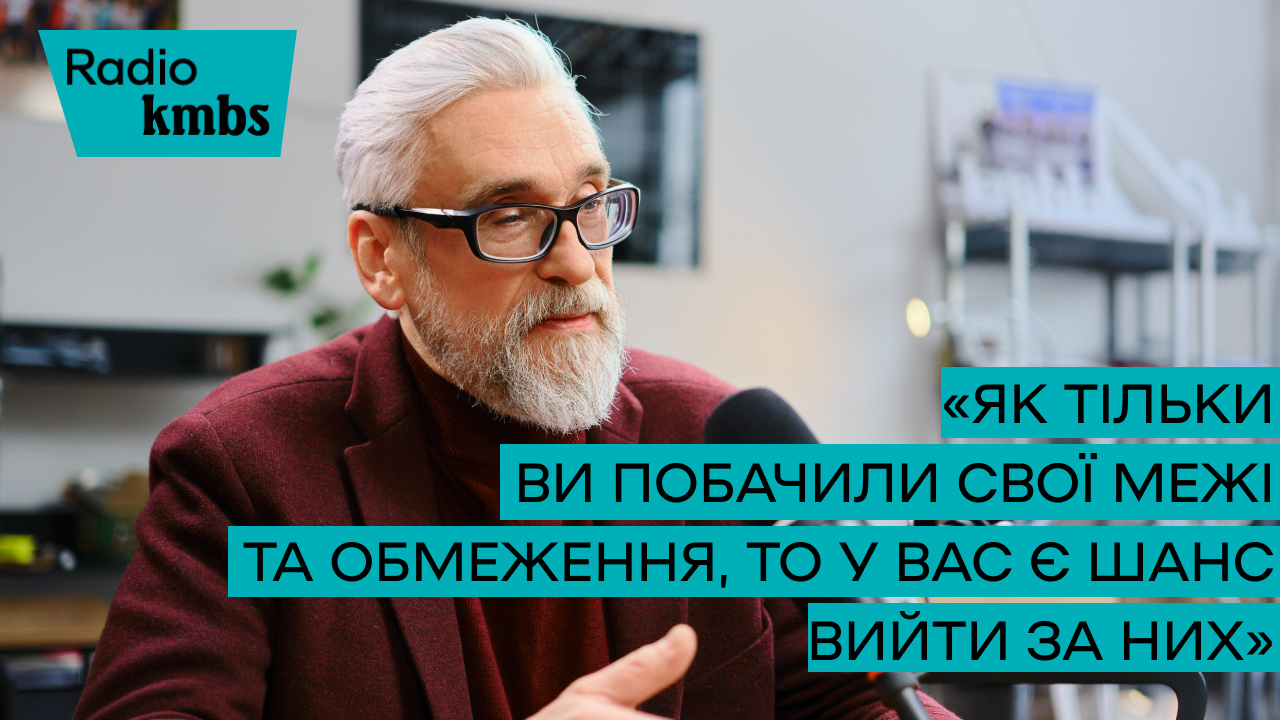
This content was created based on a podcast with Olena Maltseva about "Searching for New Opportunities: The Three Horizons of Customer Value Development" from Radio kmbs. Olena Maltseva – Business Development Director at kmbs, Head of the Executive MBA and the "School of Marketing," "Strategic Marketing for Executives," and "Summer School of Total Marketing" programs.
A key point of growth is that a company cannot be successful forever, especially with the same product and in a changing context.
Specifically, economist Adrian Slywotzky wrote about value migration and changing customers. Therefore, it is crucial to first adapt the customer value proposition based on real contextual changes. Let's move on to examining the development horizons.
What is the First Horizon?
If you are looking for ways to develop your company, you should start with the first horizon of customer value development. At this stage, you must help the customer solve their task with a better outcome. A company always has the opportunity to create added value for the customer in a way that helps them solve a task faster, cheaper, and more conveniently. It's important to understand that this is not about making the product cheaper.
For example, you can choose "speed" as a core criterion in your value proposition and work on it. Examples of such businesses are Uklon, Nova, and McDonald's. In the first horizon, companies typically work actively to implement their value proposition as effectively as possible. For example, how can you make a taxi arrive in 1-2 minutes instead of 10-15?
Also, in the first horizon of value management, a company, in a sense, engages in scaling its product; in marketing, this is called versioning. During this process, you adapt the product to narrower segments with a specific task and in a particular context. For example, in the case of the Uklon app, different customers have the option to choose their preferred type or class of car. So, versioning does not fundamentally change the business or value proposition. However, with several product versions, you strengthen your core offering even in the first horizon, as the customer will be able to choose what suits them best. At this stage, you also segment customers from the "jobs to be done" perspective while considering the specific context and the results the customer expects.
However, the first horizon will not work for businesses just entering the market. This solution can be operationally inefficient if the product is completely new and the company lacks a certain level of development.
How Does the Second Horizon Work?
The second horizon is about leveraging your core business to find and discover adjacent segments to enhance your value proposition. In other words, you help the customer solve additional tasks. For example, besides movies and series, Netflix also launched video games.
Since value migrates, a business cannot continue to simply do the same task with a better result.
You need to go further and move to the second horizon to find adjacent segments for creating complementary solutions. For example, we all know that high-speed Intercity trains have cafes where passengers can buy food. This case is also interesting because entering an adjacent segment does not necessarily have to be done by your own business. For this, you can seek long-term strategic partnerships. This way, you provide greater consumption value to the customer.
Why is the Third Horizon the Most Difficult?
The third horizon is about creating completely new opportunities and competencies for the company. We can also call these incremental innovations, or as Clayton Christensen called them – "disruptive innovations." At kmbs, we often refer to these as transformational strategies, involving a significant change for the customer or the proposition itself. The third horizon requires a fundamental change in the business model, so each company will have its own level of readiness for such significant transformations.
In the Ukrainian context, an example could be the company "Dmytruk" and their Kabanosy. They entered a new market and a new customer with a different need. One might mistakenly think they remained in their core business of producing sausage products. However, in reality, they entered a different niche of "creating nutritious products that can simplify life." To achieve this, they, as a business, had to change all key processes: resources, strategic control, partners, etc. During marketing programs, we often say that thinking about reinventing the business is necessary precisely when things are going well.
This is the most difficult idea for entrepreneurs, CEOs, or marketing directors to accept. Because a business might have growing revenue, good margins, and excellent customer feedback, which, at first glance, does not indicate a radical need for change. In any transformation, there will always be those who oppose it, as it's normal not to want radical changes in a company or business model.
But when the business situation worsens in the future, the opportunity to reinvent yourself might no longer exist. Therefore, it is better to transition to the third horizon when you foresee in advance that both customers and the competitive landscape among key players will change in the future.
Sometimes we need to give up what we want now to get what we want even more later.
It's important to remember that we must constantly think about our business in terms of the next horizons. Your revenue might decline, the customer's core need might change, and the number of strong competitors might increase. Therefore, business owners and top managers need to constantly seek new opportunities to enhance their value. If you are in the first horizon, staying in your core business with the existing proposition, you still need to think about the next horizon and consider what it might look like for your company.